Lighter Wireless-Charging Cores: How Variable-Thickness Ferrite Reduces Loss and Material
How variable-thickness ferrite tiles can reduce wireless-charging core loss, volume and material.
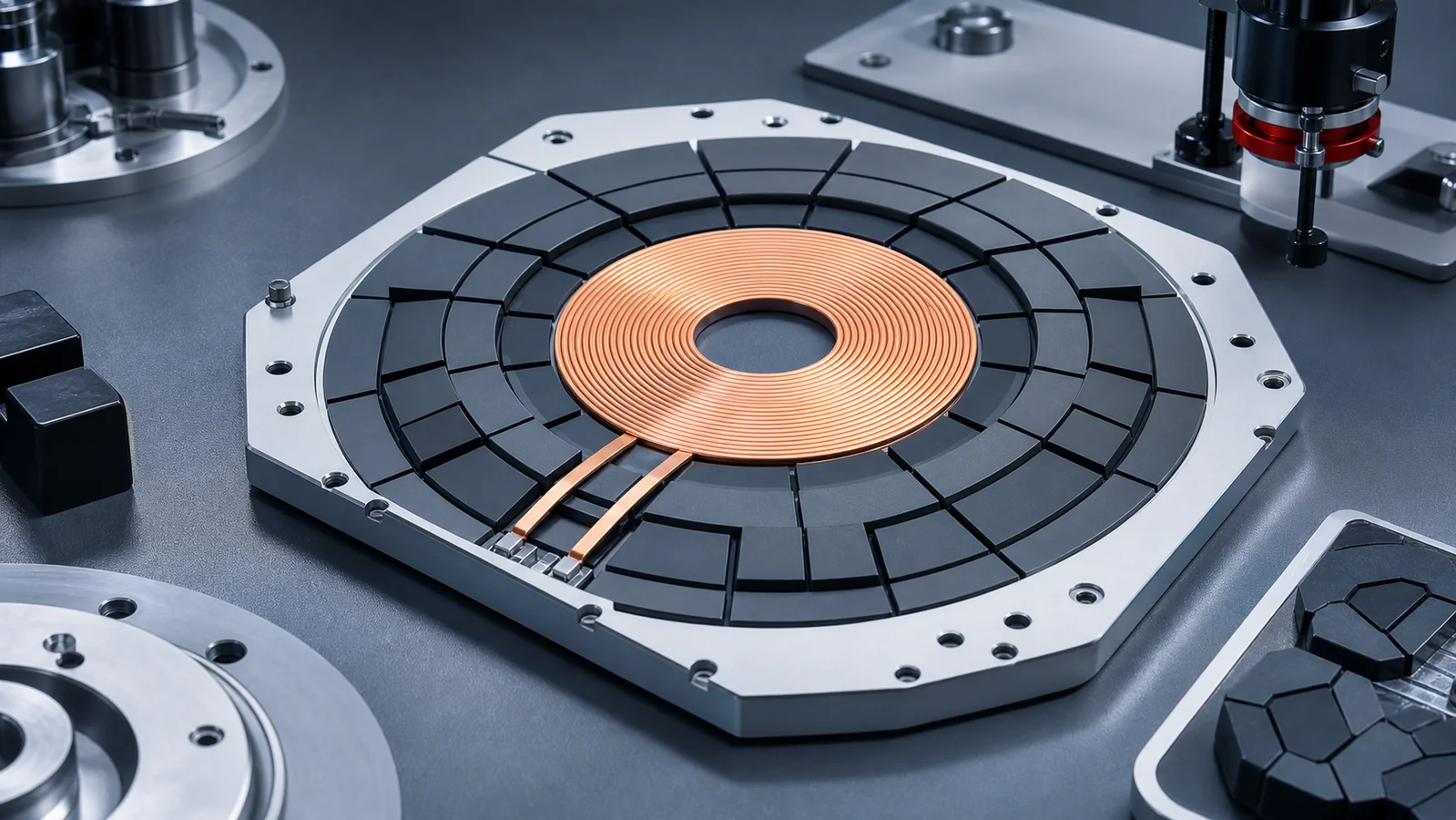
Wireless-charging receivers often use large ferrite tile arrays to guide magnetic flux, but uniform thickness does not necessarily match the actual flux distribution. An Oak Ridge National Laboratory topographic mapping approach varies ferrite thickness with local flux density to reduce core volume and loss while improving mutual inductance. Put material where flux needs it High-flux regions require more cross-sectional area, while low-flux regions can be thinner. Variable or zoned thickness improves material utilization but adds tooling, assembly, flatness and tolerance challenges. Production considerations Validation should cover flux concentration at tile joints, adhesive thickness, mechanical shock, thermal cycling and fracture risk. Tile dimensional consistency and assembly gaps can also affect system-to-system variation. Source: ORNL ATOM magnetic-core design method